
Why UX Beats UI for Real‑World Usability in Agile SaaS Projects

🚀 The Bottom Line
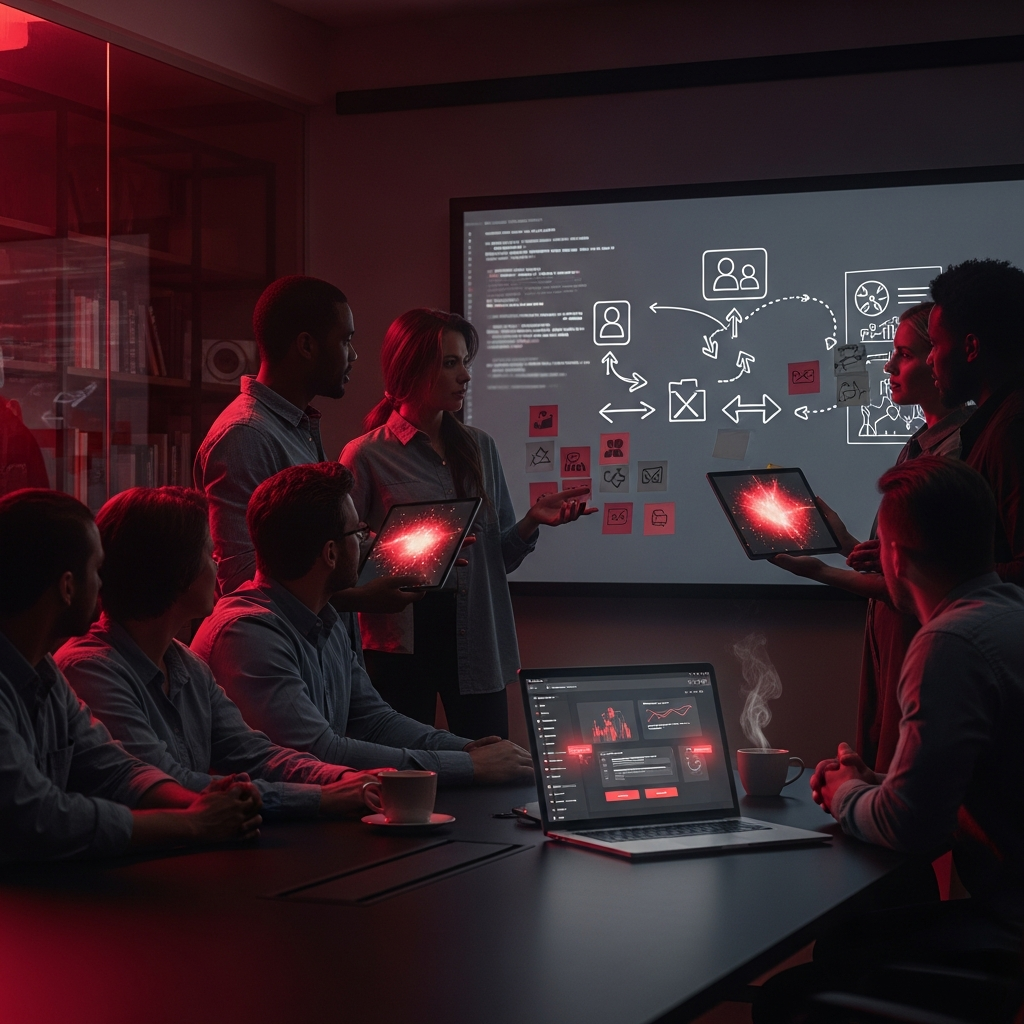
When a Scrum team ships a new feature, the experience users have while completing their tasks matters far more than how pretty the screen looks. Good UX research and design uncovers hidden friction, validates assumptions early, and drives measurable usability gains, while fancy UI polish alone can’t fix broken workflows.
🎯 What “Usability” Really Means (and Why It Matters)
| Usability Pillar | What it Looks Like | Business Impact |
|---|---|---|
| Learnability | First‑time users finish core tasks without a tutorial. | Faster onboarding → higher conversion. |
| Efficiency | Power users complete repeat actions in fewer clicks/seconds. | More transactions per hour → revenue lift. |
| Memorability | After a break, users resume work with little re‑learning. | Lower support tickets → cost savings. |
| Error Management | Mistakes are rare; when they happen the system helps recover quickly. | Reduced churn & higher trust. |
| Satisfaction | Users feel confident and enjoy the flow. | Net promoter score (NPS) climbs. |
Source: Nielsen Norman Group’s Usability 101 framework.
🛠️ UX vs UI The Real Difference
- UI (User Interface) is the visual layer buttons, colors, typography.
- UX (User Experience) is the *process* that makes those visuals useful: research, persona mapping, journey modeling, prototyping, testing, and iteration.
A gorgeous UI can’t compensate for a workflow that forces users to hunt for a button or repeat steps. In agile terms, UI is a *feature*; UX is a *quality attribute* you continuously validate in every sprint.
📈 How Usability Improves Bottom‑Line Metrics
- Conversion Rate Boost: Nielsen research shows a 10 % usability investment can double conversion on e‑commerce sites.
- Support Cost Reduction: Every usability issue eliminated saves an average of $50‑$100 per support ticket (per user).
- Time‑to‑Value for Teams: Small, rapid usability tests (5 users) reveal 85 % of critical problems, letting Scrum teams fix them before the next sprint review.
🏎️ Embedding UX into Agile & Scrum
| Scrum Ceremony | UX Action | Outcome |
|---|---|---|
| Sprint Planning | Add *UX research tasks* (e.g., quick diary study, remote test) to the backlog with clear acceptance criteria. | Stories are built on real user needs, not assumptions. |
| Daily Stand‑up | Share brief usability findings (“User A struggled with filter UI”). | Immediate course correction; devs can adjust mid‑sprint. |
| Sprint Review | Demonstrate *validated* prototypes, not just polished screens. Invite actual users or product owners to test. | Stakeholders see real impact, not just aesthetics. |
| Retrospective | Reflect on “Did we test enough?” and plan next usability experiment. | Continuous improvement loop for the whole team. |
🤖 AI‑Powered UX Research, A Game Changer
- Automated Session Replay & Heatmaps (e.g., FullStory, LogRocket) surface friction points without manual lab tests.
- LLM‑driven Interview Summaries turn raw user quotes into actionable insights in minutes.
- Predictive Usability Scoring uses historic data to flag risky features before they’re built.
These tools let agile teams keep the *speed* of Scrum while still delivering high‑quality, user‑centric outcomes.
📚 Quick Playbook for SaaS Consulting Teams
- Start with a Problem Statement: “Users can’t create a project in under 2 minutes.”
- Recruit Real Users: (5–7 per test) from your target persona pool.
- Run a Low‑Fidelity Test: paper prototype or clickable mockup. Observe, record pain points.
- Iterate Fast: Apply fixes, retest in the next sprint.
- Validate with Metrics: Task success rate ↑, time on task ↓, satisfaction score ↑.
Repeat each cycle; you’ll see a steady climb in usability scores and business KPIs.
🎉 Bottom Line for Your SaaS Clients
- UX = Usability + Business Value it’s the engine that turns features into revenue‑generating experiences.
- Investing early in UX research saves weeks of rework, cuts support costs, and accelerates adoption.
- In a Scrum environment, treat usability testing as a *first‑class citizen* user story just like any backend feature.
When you champion UX over UI, you give agile teams the confidence that every sprint delivers not just a prettier screen, but a product people actually want to use. 🚀✨